If you visit this page, it means you are interested in the upcoming training Cultural Awareness held within the #ErasmusDays 🙂 The training will be organized by Fundacja Wspierania Dialogu „Rozmawiajmy” in Warsaw, Oct the 16th. Would you like to know more about the high-context vs low-context cultures and six cultural dimensions by Hofstede? Let’s start with the first topic.
In low-context cultures communication tends to be very specific and literal, although memebers of high-context cultures may find their straight-to-the-point attitude even rude. In high-context cultures the goal is more important than relationships between people, also time management is very strict – if we are ment to meet at 9, we meet at 9, not at 9.05, 9.15 or (Heaven forbid!) at 10. In contrast high-context cultures rely on implicit, non-verbal communication. Shared understandings – symbols, behaviours – are very important and may make it very difficult to understand the communication for those from outside this culture. For example – who would understand that in noble Poland offering czernina, also called czarna polewka (black soup, soup made with blood of ducks or geese) to a suitor would mean that he got rejected? Germany and the United States are good examples of low-context countries while Japan, Middle East and Russia are mostly high-context countries.
Let’s move on to six cultural dimensions:
- Power Distance is about the obedience to power and authority, its’ roots may be associated with the scheme of upbringing of children – if they are ment to obey their parents or is to more about some form of partnership
- Uncertainty Avoidance tells us if members of the society accept the fact that many events are not to be projected and chaos, changes are a normal part of our life, or on the other hand this kind of uncertainty is met with anxiety and tendention to control the unexpected
- Individualism vs. Collectivism is not that much about caring for other memebers of your group but more about having a very strict place and role in group hierarchy (in collectivist cultures). In individualistis cultures my goals are more important that group’s goals, I am also more free to express my individualism thru my attire, actions etc.
- Masculinity vs. Femininity: is connected with traditional gender roles and behaviours – men are perceived to be strong, competitive and assertive while women are more emotional and caring. An easy test for a society is the acceptance of a female leader – would men obey a female president or boss at work? Feminine countries are still masculine (all countries are masculine) but the disproportion is smaller
- Long-Term vs. Short-Term Orientation is about setting long-term goals, with bigger reward but longer anticipated or smaller but easier to achieve ones
- Indulgence vs. Restraint is about the perception of the role of pleasure in our existence – are we born to work (especially work hard) and pleasure may only be an addition, or even a distraction, as members of restrrain societies percieve it, or life is fun, we should enjoy every moment, there is no limit in pleasure etc.
You may also find it interesting to compare different countries that you know in terms of these dimensions using a tool designed for it: https://www.theculturefactor.com/country-comparison-tool
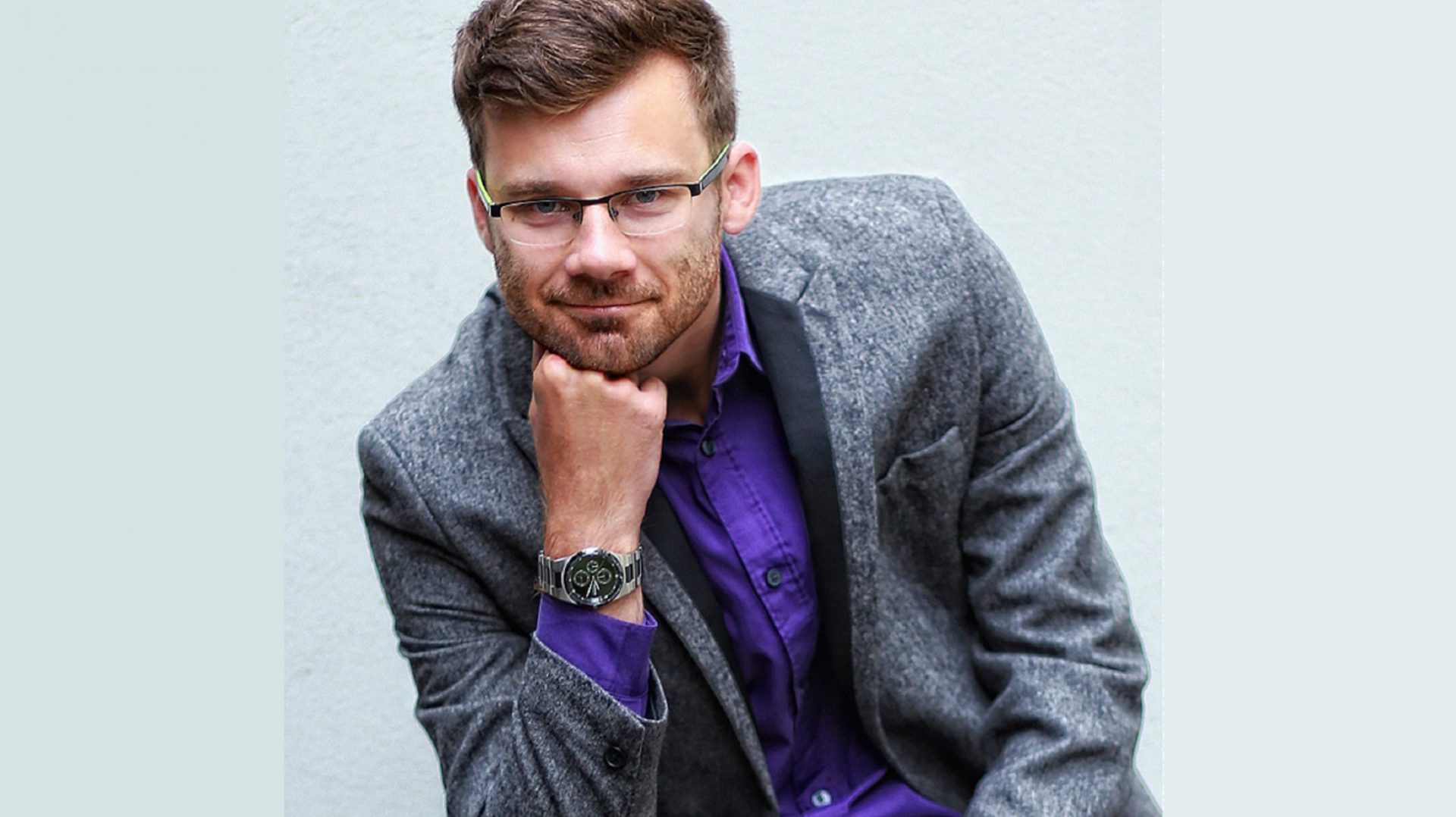
Trainer: Paweł Tempczyk
I am a psychologist and personal development trainer (Faculty of Psychology, University of Warsaw). From 2018 to 2021, I served as vice president of the Poczucia Association. As vice president, I coordinated and co-led the DEMOcrisis – Fostering Active Citizenship in Times of Crisis training course, funded by an ErasmusPlus grant. I spent almost 5 years working as an academic teacher for foreigh students at the University of Economics and Human Sciences, where I was leading soft-skills trainings (assertiveness and stress management, self-presentation and public speaking, training basics, interpersonal skills) I also developed my competencies and skills through numerous EU projects (trainings, conferences, networking events, and youth exchanges), including: in Athens, Bakuriani (Georgia), Bansko (Bulgaria), Brussels, Budapest, Yerevan (Armenia), Esch-sur-Azette (Luxembourg), Helsinki, Kyiv, Ljubljana, Novi Sad (Serbia), Ponta Delgada (Azores, Portugal), Podgorica (Montenegro), Skopje (North Macedonia), Strasbourg, Villa Nova de Gaia (Portugal), Vilnius, and the Wicklow Mountains (Ireland).
Please fill in the form to take part in the training: https://forms.gle/mB4V5uzAReiFPYSF9